

How to Keep Your Lab-Grown Diamond Ring Brilliant: A Practical Care Guide for Everyday Wear
How to Keep Your Lab-Grown Diamond Ring Brilliant: A Practical Care Guide for Everyday Wear
A lab-grown diamond is designed for a lifetime of brilliance, but even the hardest gemstone can look dull when body oils, lotion, soap, and dust collect on its surface. For engagement-ring owners and everyday jewelry lovers in the US and Europe, the real question is not whether a lab-grown diamond lasts—it is how to care for it without damaging the setting or losing confidence in daily wear.
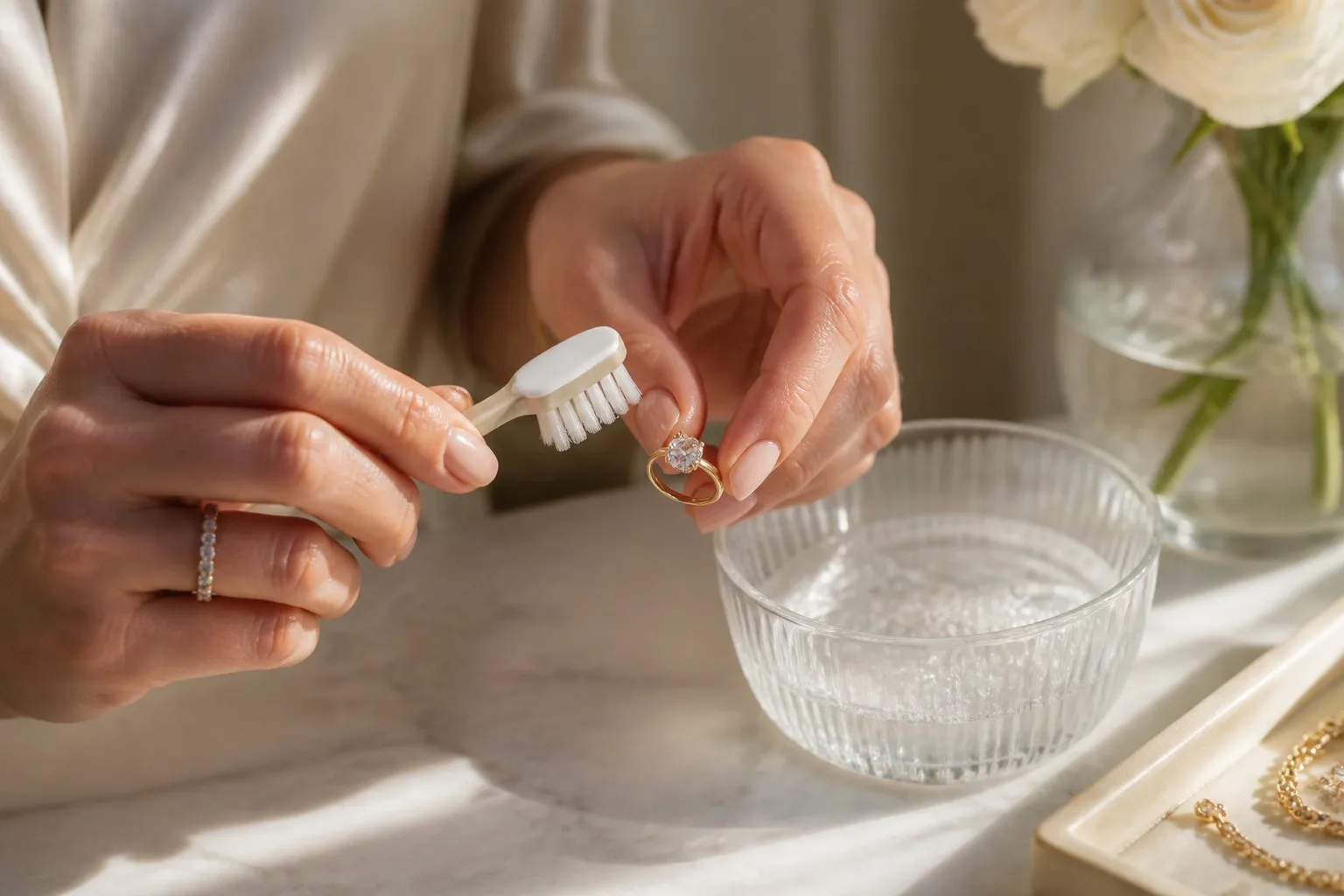
Why a Real Diamond Can Look Dull
Cloudiness on the surface is usually not a change in the diamond itself. Oils and residue can cover the tiny facets that reflect light back to the eye. A lab-grown diamond has the same essential hardness and optical behavior as a mined diamond, but it still needs routine cleaning to perform at its best.
This addresses a common quality and longevity pain point: a customer may worry that an “artificial” stone is fading when the real issue is simply surface buildup.
A Safe Weekly Cleaning Routine
- Fill a small bowl with warm, not boiling, water.
- Add a few drops of mild, fragrance-free dish soap.
- Soak the ring for 10–15 minutes.
- Use a clean, very soft brush to gently clean under the stone and around the setting.
- Rinse over a bowl or with the drain closed.
- Pat dry with a lint-free cloth and allow the setting to air-dry fully.
What to Avoid
- Do not use bleach, chlorine, acetone, or abrasive household cleaners.
- Do not scrub with toothpaste, baking soda, or a hard-bristle brush.
- Do not place a delicate ring in an ultrasonic cleaner unless your jeweler confirms the setting is suitable.
- Remove rings before swimming, gardening, heavy lifting, or applying creams and hair products.
Care for the Setting, Not Just the Stone
Diamond hardness does not protect the metal, prongs, or fine details of a setting. Check the prongs occasionally for looseness, make sure the stone does not rattle, and have the ring inspected if it catches on clothing. Keep your jewelry in a separate soft-lined compartment so harder stones do not scratch other pieces.
Ask an Expert: Everyday Wear FAQ
Q: Can a lab-grown diamond become cloudy over time?
A: The diamond itself does not fade or turn cloudy from normal wear. A film of oil, soap, or dust can temporarily reduce sparkle and is usually removed with gentle cleaning.
Q: Can I wear my ring in the shower?
A: Occasional water exposure is usually less concerning than repeated soap and product buildup. Removing the ring before showering helps keep the stone and setting cleaner and reduces the chance of residue collecting underneath.
Q: How often should I check the setting?
A: Perform a quick visual check every few weeks and arrange professional inspection if a prong looks bent, the stone moves, or the ring catches on fabric.
Q: Does certification replace jewelry care?
A: No. An IGI or GIA report documents the diamond’s characteristics and lab-grown origin, while proper care protects the stone’s presentation and the setting’s condition over time.
Build a Simple Jewelry Care Kit
Keep a soft brush, mild soap, lint-free cloth, and separate storage pouch at home. This small routine helps a 1-carat stone of roughly 6.4mm—or a larger 2-carat stone with different measurements—stay bright between professional inspections. Always compare the actual carat and millimeter specifications on the stone’s IGI or GIA report.
Looking for an everyday piece that is easy to style and care for? Explore Lab-Grown Diamond Rings or browse our Everyday Essentials Collection.
Download our free Jewelry Care Checklist when you subscribe for a concise routine covering cleaning, storage, setting checks, and travel.